


Thermal Analysis
Thermal Analysis Services By Radian
Thermal analysis is crucial in many industries, including manufacturing, engineering, and materials science. It involves studying the behavior of materials under different temperature conditions to understand their thermal properties and how they may react in various environments. This information is essential for designing and optimizing processes, ensuring product quality and safety, and making informed decisions.
Our thermal analysis testing services give you valuable insights into the thermal properties of your materials. This information can help you optimize your manufacturing processes, improve product performance, and comply with industry standards and regulations. Additionally, it can aid in identifying and preventing potential issues, such as thermal degradation, phase transitions, and material compatibility.
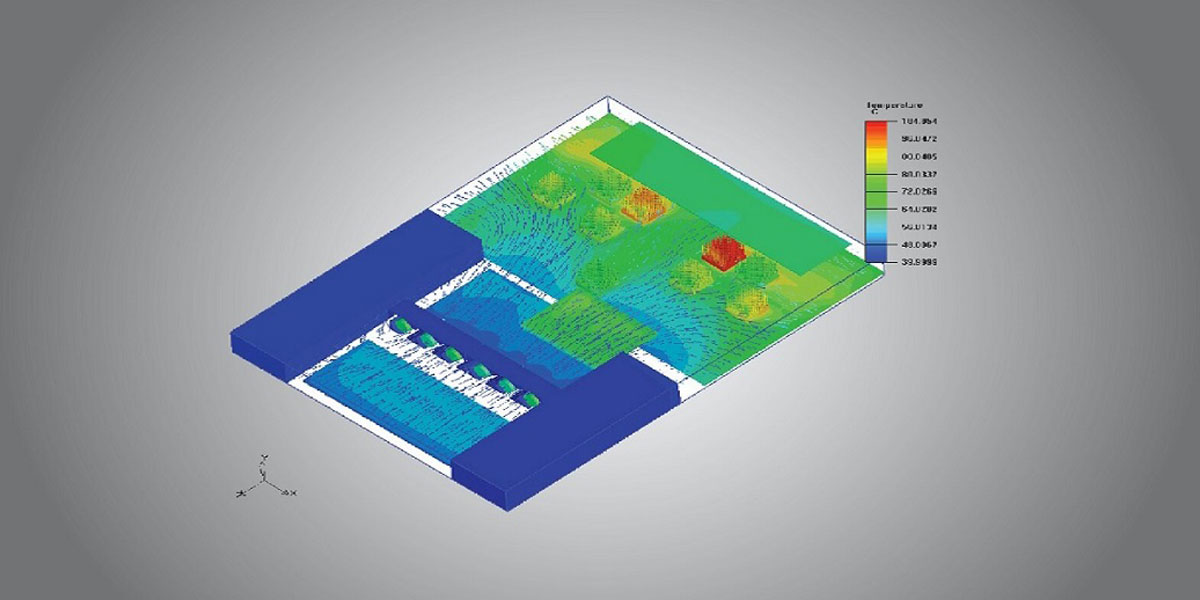
Radian offers detailed thermal analysis and validation services using powerful Computational Fluid Dynamics (CFD) and proprietary simulation packages. With this effective modeling technology, our on-site thermal design engineers can asses your designs throughout the development cycle – at Component, Board and System levels. By directly loading your CAD files into our CFD package, we can conduct the analyses you need and deliver results within a short time frame.
Thermal CFD Analysis is based on state-of-the-art thermal simulation modeling, fluid mechanics, and finite element analysis, our state-of-the-art design simulation system allows you to approximate a heatsink design to match your specific requirements – often within 24 hours, not days or weeks. The system can promptly forecast thermal performance for a given heatsink design with varying air speeds – and even determine the optimum number of pin rows and columns for your individual performance specifications. Within moments, we can help establish the fin style and pattern necessary to maximize performance and minimize air pressure loss. Radian’ simulations are generally within +/- 7 percent of the actual test. High performance heatsinks are manufactured by a variety of different processes such as die casting, micro forging, extrusion, investment casting, and machining. Knowing the manufacturing strengths of each process and the thermal conductivity of the metals used by each, Radian’s design system can also be used to predict the most cost-effective processes for your application. In addition, Radian engineers can work with you to select the approach that best fits your cost/performance ratio.
Through our design simulations, we can effectively pre-determine a heatsink configuration that will significantly streamline production implementation. Once an optimum heatsink model is reached, Radian can prototype the design using our Rapid Prototyping technologies. Actual testing in your system can be enacted in a timely and cost-effective manner within weeks, not months.
Thermal Analysis example
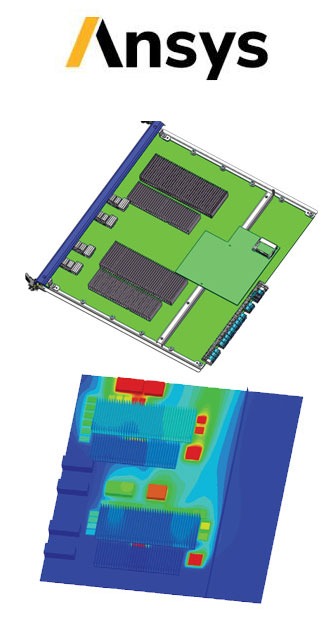
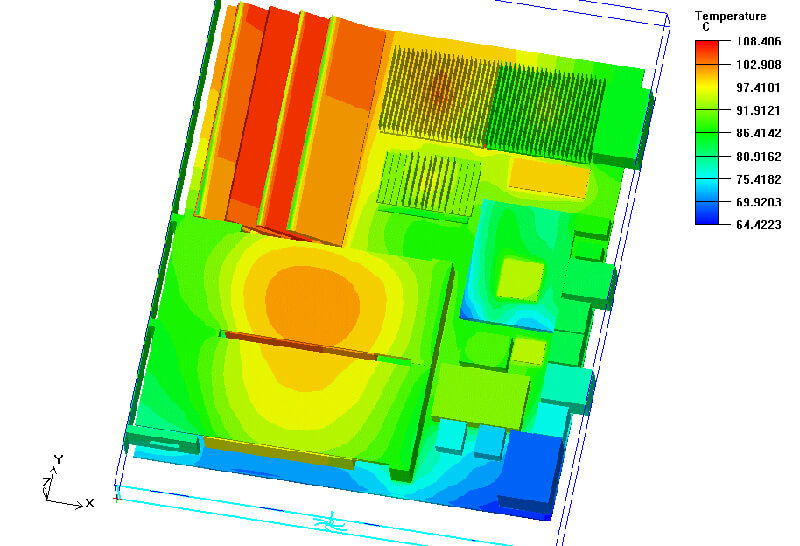
Electronic assemblies must dissipate thermal energy from components to prevent premature failure due to overheating. Radian Thermal Products specializes in designing and building innovative custom heat sink designs that help to solve thermal problems. Recently, a manufacturer of telecommunications products asked Radian to help cool a pluggable card that was overheating. Radian engineers simulated the design with ANSYS Icepak electronics cooling simulation software. Using simulation, the team discovered that the fin density on the heat sinks in the original design prevented air from reaching downstream components and that variations in component height reduced the effective thermal conductivity. Engineers redesigned the cooling system using a larger number of smaller heat sinks attached to single components. They employed the ANSYS Workbench parameter manager to optimize the number of fins, fin thicknesses and other design parameters. The optimized design operates safely at ambient temperatures that are 20 C higher than the original design.
The manufacturer of telecommunications products designed a pluggable card with several integrated circuits and heat sinks that fit into an Advanced Telecommunications Computing Architecture (ATCA) rack mount chassis. Simulation showed that the heat sinks cooled the chips they were attached to, but other components experienced excessive temperatures. Radian engineers began addressing this issue by obtaining information from the manufacturer such as the space available for heat sinks, dissipated power, power supply size, fan size and placement, target ambient temperature, attachment methods, and maximum allowable junction temperatures for the components. The maximum junction temperature is the highest internal temperature that a component is rated to withstand without damage. Traditionally, thermal management design is based on engineering experience and instinct. In the past, companies usually needed to build and test numerous prototype designs to understand and resolve thermal problems. Advanced simulation tools like ANSYS Icepak enable engineers to reduce costs and time to market by verifying a design’s proof of concept with accurate thermal results prior to building a prototype. In this case, the manufacturer had already created a relatively simple heat- sink design and performed a thermal simulation with a non-ANSYS simulation tool. The simulation results showed that junction temperatures were too high but did not provide a clear path to resolve the thermal issues.
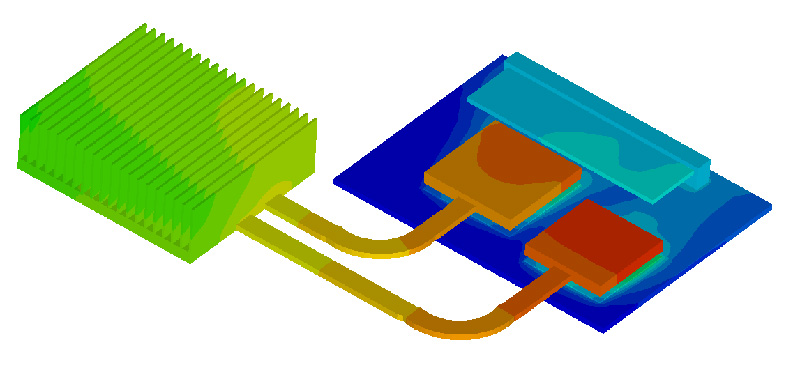
Radian engineers decided to add a heatpipe, which efficiently transfers heat from a hot spot to a heat sink located some distance away. A heatpipe contains a liquid that turns into vapor when it absorbs heat from a thermally conductive surface attached to a hot component. The vapor travels to the other end of the heat pipe, which is much cooler, and condenses back into a liquid. The liquid then returns to the hot interface through capillary action, and the cycle repeats. Simulation showed that the heat pipe provided further performance improvements. The Icepak model was updated, and a new simulation showed that the final design achieved a 65 C reduction in temperature in the hottest area on the board.
Radian’s U.S.-based manufacturing facility provided initial prototype heat sinks within three days. The manufacturer performed final physical tests that matched the simulation results and accepted the Radian design. The product is now on the market with a maximum junction temperature of 85 C at 55 C ambient. Radian is manufacturing the production heat sinks in its Asia facilities, and the thermal performance of the product has been verified in the field.
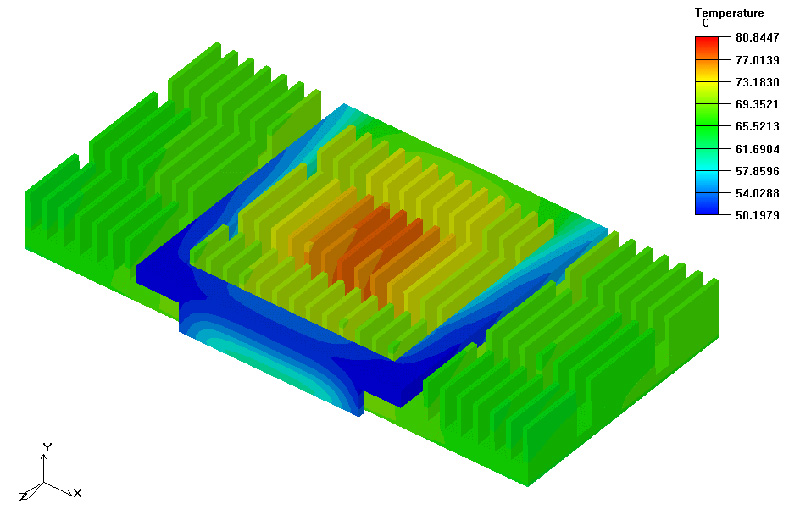
Additional Thermal Analysis examples
THERMAL ANALYSIS SERVICES BY RADIAN
Thermal analysis is crucial in many industries, including manufacturing, engineering, and materials science. It involves studying the behavior of materials under different temperature conditions to understand their thermal properties and how they may react in various environments. This information is essential for designing and optimizing processes, ensuring product quality and safety, and making informed decisions.
Our thermal analysis testing services give you valuable insights into the thermal properties of your materials. This information can help you optimize your manufacturing processes, improve product performance, and comply with industry standards and regulations. Additionally, it can aid in identifying and preventing potential issues, such as thermal degradation, phase transitions, and material compatibility.
Radian offers detailed thermal analysis and validation services using powerful Computational Fluid Dynamics (CFD) and proprietary simulation packages. With this effective modeling technology, our on-site thermal design engineers can asses your designs throughout the development cycle – at Component, Board and System levels. By directly loading your CAD files into our CFD package, we can conduct the analyses you need and deliver results within a short time frame.
Thermal CFD Analysis is based on state-of-the-art thermal simulation modeling, fluid mechanics, and finite element analysis, our state-of-the-art design simulation system allows you to approximate a heatsink design to match your specific requirements – often within 24 hours, not days or weeks. The system can promptly forecast thermal performance for a given heatsink design with varying air speeds – and even determine the optimum number of pin rows and columns for your individual performance specifications. Within moments, we can help establish the fin style and pattern necessary to maximize performance and minimize air pressure loss. Radian’ simulations are generally within +/- 7 percent of the actual test. High performance heatsinks are manufactured by a variety of different processes such as die casting, micro forging, extrusion, investment casting, and machining. Knowing the manufacturing strengths of each process and the thermal conductivity of the metals used by each, Radian’s design system can also be used to predict the most cost-effective processes for your application. In addition, Radian engineers can work with you to select the approach that best fits your cost/performance ratio.
Through our design simulations, we can effectively pre-determine a heatsink configuration that will significantly streamline production implementation. Once an optimum heatsink model is reached, Radian can prototype the design using our Rapid Prototyping technologies. Actual testing in your system can be enacted in a timely and cost-effective manner within weeks, not months.
Thermal Analysis example

Electronic assemblies must dissipate thermal energy from components to prevent premature failure due to overheating. Radian Thermal Products specializes in designing and building innovative custom heat sink designs that help to solve thermal problems. Recently, a manufacturer of telecommunications products asked Radian to help cool a pluggable card that was overheating. Radian engineers simulated the design with ANSYS Icepak electronics cooling simulation software. Using simulation, the team discovered that the fin density on the heat sinks in the original design prevented air from reaching downstream components and that variations in component height reduced the effective thermal conductivity. Engineers redesigned the cooling system using a larger number of smaller heat sinks attached to single components. They employed the ANSYS Workbench parameter manager to optimize the number of fins, fin thicknesses and other design parameters. The optimized design operates safely at ambient temperatures that are 20 C higher than the original design.
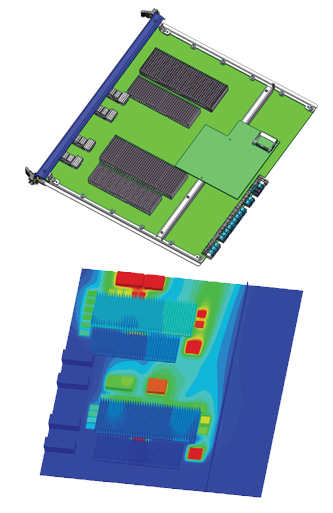
The manufacturer of telecommunications products designed a pluggable card with several integrated circuits and heat sinks that fit into an Advanced Telecommunications Computing Architecture (ATCA) rack mount chassis. Simulation showed that the heat sinks cooled the chips they were attached to, but other components experienced excessive temperatures. Radian engineers began addressing this issue by obtaining information from the manufacturer such as the space available for heat sinks, dissipated power, power supply size, fan size and placement, target ambient temperature, attachment methods, and maximum allowable junction temperatures for the components. The maximum junction temperature is the highest internal temperature that a component is rated to withstand without damage. Traditionally, thermal management design is based on engineering experience and instinct. In the past, companies usually needed to build and test numerous prototype designs to understand and resolve thermal problems. Advanced simulation tools like ANSYS Icepak enable engineers to reduce costs and time to market by verifying a design’s proof of concept with accurate thermal results prior to building a prototype. In this case, the manufacturer had already created a relatively simple heat- sink design and performed a thermal simulation with a non-ANSYS simulation tool. The simulation results showed that junction temperatures were too high but did not provide a clear path to resolve the thermal issues.
Radian engineers decided to add a heatpipe, which efficiently transfers heat from a hot spot to a heat sink located some distance away. A heatpipe contains a liquid that turns into vapor when it absorbs heat from a thermally conductive surface attached to a hot component. The vapor travels to the other end of the heat pipe, which is much cooler, and condenses back into a liquid. The liquid then returns to the hot interface through capillary action, and the cycle repeats. Simulation showed that the heat pipe provided further performance improvements. The Icepak model was updated, and a new simulation showed that the final design achieved a 65 C reduction in temperature in the hottest area on the board.
Radian’s U.S.-based manufacturing facility provided initial prototype heat sinks within three days. The manufacturer performed final physical tests that matched the simulation results and accepted the Radian design. The product is now on the market with a maximum junction temperature of 85 C at 55 C ambient. Radian is manufacturing the production heat sinks in its Asia facilities, and the thermal performance of the product has been verified in the field.
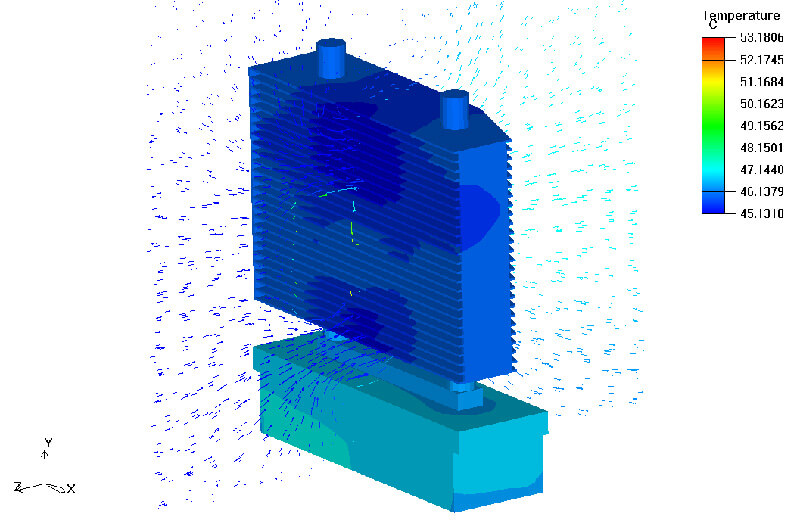
Additional Thermal Analysis examples