


Home / Air Cooling Solutions / Forged Heatsink
Air Cooling
Forged Heatsink
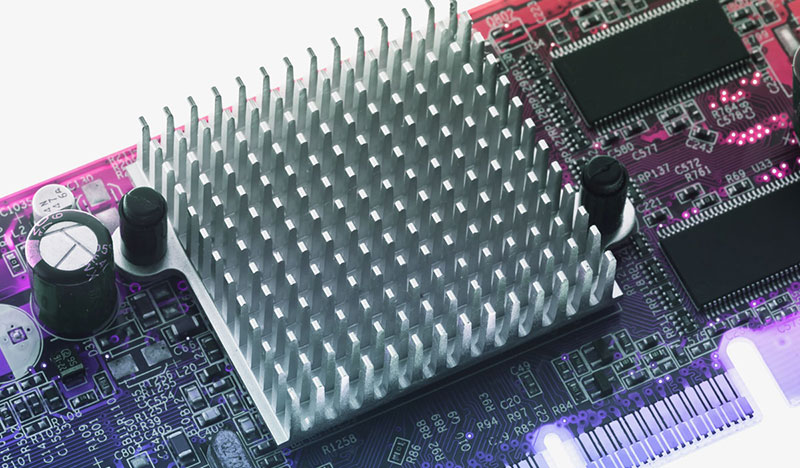
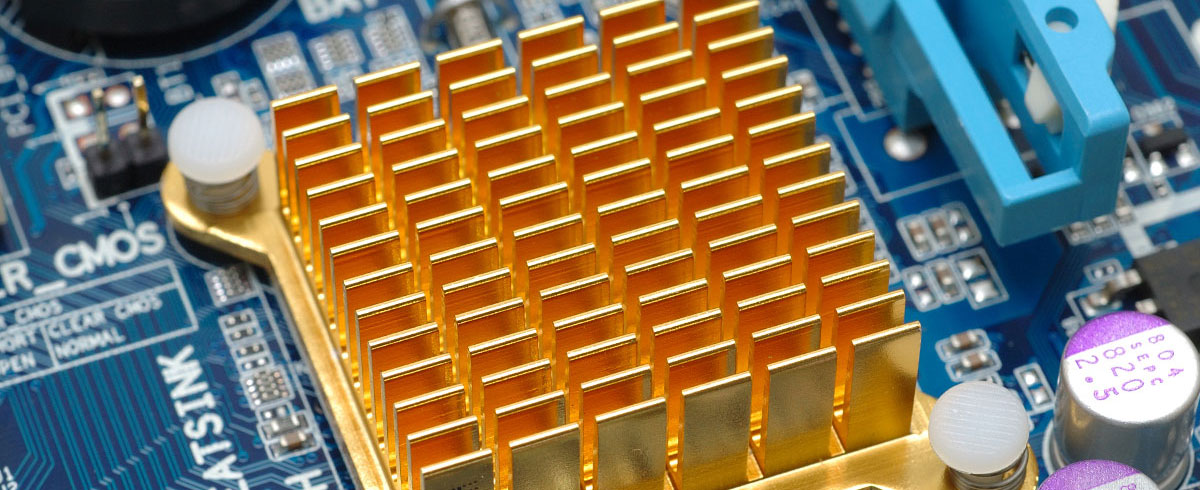
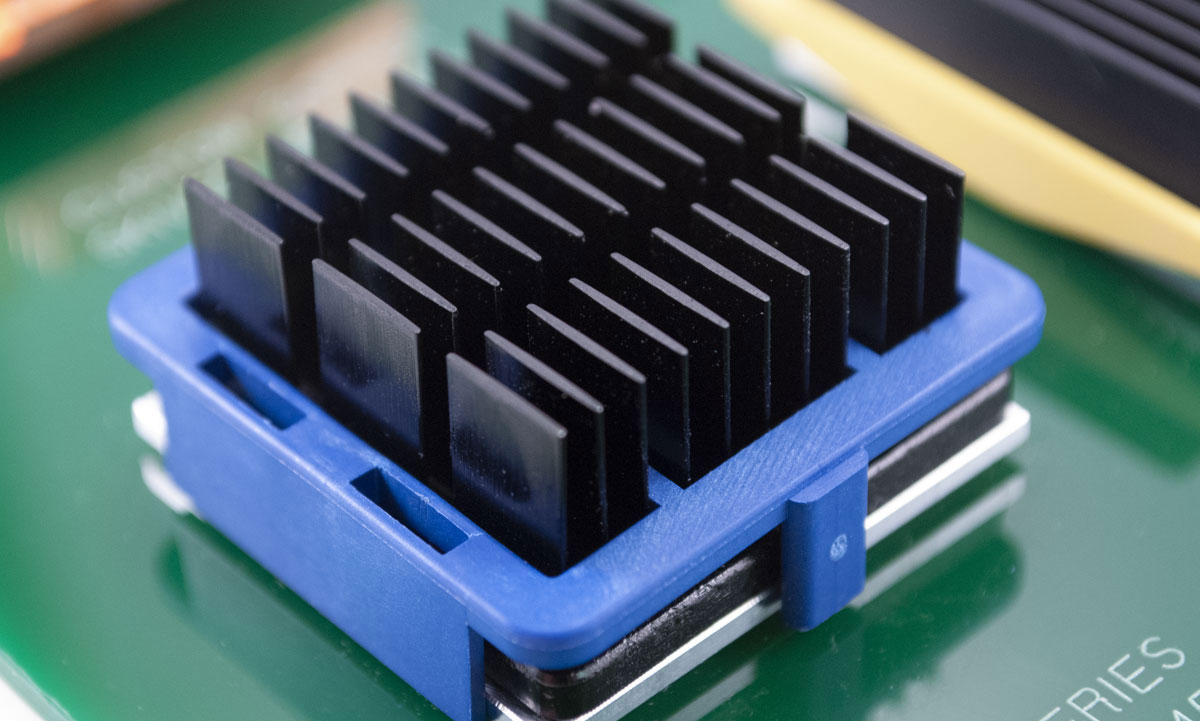
Why Use a Forged Heatsink?
Cold-forging is a metal shaping process performed at or near room temperature, contrasting with traditional hot forging methods. By exerting high pressure to shape the metal, Cold-forging creates products with high strength, precision, and excellent surface finish. This improves the thermal properties of the heatsink and increases the density of the material.
When it comes to managing heat in electronic applications, a reliable heatsink is indispensable. Forged heatsinks are highly preferred for their durability, strength and excellent thermal conductivity. We are the leading forged heatsink manufacturer in the industry.
A Cold-forged heatsink is a good alternative to casting to form complex shapes with excellent thermal conductivity. The Cold-forging process produces almost perfectly straight fins, allowing for more fins per square mm. Cold-forging can be used to produce plate-fin, round-pin, and elliptical-fined heat sinks. Cold-forging is well suited to the manufacture of copper heatsinks, where the copper can be formed at low temperature with minimal damage. Secondary machining operations such as hole, chamfer, and steps can be included in the manufacturing process, thus reducing waste. Forging involves the shaping of metal using localized compressive forces.
Radian Thermal Products utilizes special open die tooling and intense pressure to produces high precision heatsinks with high aspect ratios. A Forged heatsink is typically manufactured one part at a time and can be made from AL 6063 or C1100. Aspect ratio up to 35:1 are feasible, and no draft angles are required on the fins. Fins can be round, elliptical, straight or any combination on the same part.
An added benefit of this process is that a forged heatsink of the same design can be manufactured with different heights using only one set of forging die. When working with high aspect ratio, or dense fins a forged heatsink has no thermal interface between the fins/pins, and the base which provides better performance compared to stamped-fin or bonded-fin heatsinks. Heat distribution can be further improved in aluminum heatsinks by embedding a copper insert into the base during the forging. As this process is fairly expensive, for small volumes it may be worth exploring extrusion with a crosscut to produce square pins. For larger volumes, die-casting is a good alternative.
BGA Elliptical Forged Heatsink
Radian aluminum elliptical-fin cold-forged heatsink is available to ship within a few days. If a part or BGA heatsink size is not available online we can usually offer an alternative part, or modify a part in stock to fit your needs.
| Radian Part Number | Type | Material | Style | Length (mm) | Width (mm) | Height (mm) | Theta SA (°C/W) at 200LFM | Theta SA (°C/W) at 400LFM | Theta SA (°C/W) at 600LFM | Store |
|---|---|---|---|---|---|---|---|---|---|---|
| INM17001-11W/1.7 | BGA | Aluminum | Elliptical | 17 | 17 | 10.7 | 7.8 | 6.1 | 5.43 | SHOP |
| INM17001-14W/1.7 | BGA | Aluminum | Elliptical | 17 | 17 | 13.7 | 7.16 | 5.54 | 4.82 | SHOP |
| INM17001-22W/1.7 | BGA | Aluminum | Elliptical | 17 | 17 | 21.7 | 5.74 | 4.36 | 3.69 | SHOP |
| INM17001-32W/1.7 | BGA | Aluminum | Elliptical | 17 | 17 | 31.7 | 4.83 | 3.66 | 3.18 | SHOP |
| INM19001-15W/2.6 | BGA | Aluminum | Elliptical | 19 | 19 | 14.6 | 5.89 | 4.48 | 3.84 | SHOP |
| INM19001-18W/2.6 | BGA | Aluminum | Elliptical | 19 | 19 | 17.6 | 5.45 | 4.03 | 3.48 | SHOP |
| INM19001-23W/2.6 | BGA | Aluminum | Elliptical | 19 | 19 | 22.6 | 4.7 | 3.46 | 2.98 | SHOP |
| INM19001-33W/2.6 | BGA | Aluminum | Elliptical | 19 | 19 | 32.6 | 3.88 | 2.88 | 2.54 | SHOP |
| INM21001-15W/2.6 | BGA | Aluminum | Elliptical | 21 | 21 | 14.6 | 5.1 | 3.46 | 2.82 | SHOP |
| INM21001-28W/2.6 | BGA | Aluminum | Elliptical | 21 | 21 | 27.6 | 3.74 | 2.52 | 2.04 | SHOP |
| INM21001-33W/2.6 | BGA | Aluminum | Elliptical | 21 | 21 | 32.6 | 3.43 | 2.29 | 1.9 | SHOP |
| INM23001-15W/2.6 | BGA | Aluminum | Elliptical | 23 | 23 | 14.6 | 4.22 | 2.94 | 2.46 | SHOP |
| INM23001-21W/2.6 | BGA | Aluminum | Elliptical | 23 | 23 | 20.6 | 3.69 | 2.49 | 2.06 | SHOP |
| INM23001-28W/2.6 | BGA | Aluminum | Elliptical | 23 | 23 | 27.6 | 3.1 | 2.1 | 1.6 | SHOP |
| INM23001-33W/2.6 | BGA | Aluminum | Elliptical | 23 | 23 | 32.6 | 2.82 | 1.89 | 1.6 | SHOP |
| INM25001-18W/2.6 | BGA | Aluminum | Elliptical | 25 | 25 | 17.6 | 3.7 | 2.52 | 2.05 | SHOP |
| INM25001-23W/2.6 | BGA | Aluminum | Elliptical | 25 | 25 | 22.6 | 3.18 | 2.18 | 1.76 | SHOP |
| INM27001-15W/2.6 | BGA | Aluminum | Elliptical | 27 | 27 | 14.6 | 3.89 | 2.66 | 2.23 | SHOP |
| INM27001-18W/2.6 | BGA | Aluminum | Elliptical | 27 | 27 | 17.6 | 3.59 | 2.42 | 2.01 | SHOP |
| INM27001-23W/2.6 | BGA | Aluminum | Elliptical | 27 | 27 | 22.6 | 3.08 | 2.04 | 1.66 | SHOP |
| INM27001-28W/2.6 | BGA | Aluminum | Elliptical | 27 | 27 | 27.6 | 2.78 | 1.78 | 1.47 | SHOP |
| INM27001-33W/2.6 | BGA | Aluminum | Elliptical | 27 | 27 | 32.6 | 2.52 | 1.61 | 1.31 | SHOP |
| INM29001-15W/2.6 | BGA | Aluminum | Elliptical | 29 | 29 | 14.6 | 3.81 | 2.52 | 2.02 | View |
| INM29001-18W/2.6 | BGA | Aluminum | Elliptical | 29 | 29 | 17.6 | 3.56 | 2.31 | 1.84 | View |
| INM29001-33W/2.6 | BGA | Aluminum | Elliptical | 29 | 29 | 32.6 | 2.47 | 1.49 | 1.18 | View |
| INM31001-15W/2.6 | BGA | Aluminum | Elliptical | 31 | 31 | 14.6 | 3.13 | 2.02 | 1.66 | View |
| INM31001-18W/2.6 | BGA | Aluminum | Elliptical | 31 | 31 | 17.6 | 2.85 | 1.79 | 1.45 | View |
| INM31001-21W/2.6 | BGA | Aluminum | Elliptical | 31 | 31 | 20.6 | 2.63 | 1.63 | 1.31 | View |
| INM31001-23W/2.6 | BGA | Aluminum | Elliptical | 31 | 31 | 22.6 | 2.44 | 1.5 | 1.19 | View |
| INM31001-28W/2.6 | BGA | Aluminum | Elliptical | 31 | 31 | 27.6 | 2.21 | 1.36 | 1.05 | View |
| INM31001-33W/2.6 | BGA | Aluminum | Elliptical | 31 | 31 | 32.6 | 2.02 | 1.19 | 0.93 | View |
| INM33001-15W/2.6 | BGA | Aluminum | Elliptical | 33 | 33 | 14.6 | 2.97 | 1.88 | 1.54 | View |
| INM33001-18W/2.6 | BGA | Aluminum | Elliptical | 33 | 33 | 17.6 | 2.69 | 1.7 | 1.37 | View |
| INM33001-21W/2.6 | BGA | Aluminum | Elliptical | 33 | 33 | 20.6 | 2.5 | 1.52 | 1.22 | View |
| INM33001-23W/2.6 | BGA | Aluminum | Elliptical | 33 | 33 | 22.6 | 2.3 | 1.37 | 1.08 | View |
| INM33001-28W/2.6 | BGA | Aluminum | Elliptical | 33 | 33 | 27.6 | 2.08 | 1.23 | 0.98 | View |
| INM35001-21W/2.6 | BGA | Aluminum | Elliptical | 35 | 35 | 20.6 | 2.35 | 1.52 | 1.15 | View |
| INM35001-23W/2.6 | BGA | Aluminum | Elliptical | 35 | 35 | 22.6 | 2.13 | 1.35 | 1.01 | View |
| INM35001-28W/2.6 | BGA | Aluminum | Elliptical | 35 | 35 | 27.6 | 1.94 | 1.19 | 0.86 | View |
| INM35001-33W/2.6 | BGA | Aluminum | Elliptical | 35 | 35 | 32.6 | 1.69 | 1.02 | 0.72 | View |
| INM40001-21W/2.6 | BGA | Aluminum | Elliptical | 40 | 40 | 20.6 | 2.13 | 1.31 | 0.97 | View |
| INM40001-23W/2.6 | BGA | Aluminum | Elliptical | 40 | 40 | 22.6 | 1.93 | 1.15 | 0.85 | View |
| INM40001-28W/2.6 | BGA | Aluminum | Elliptical | 40 | 40 | 27.6 | 1.73 | 1 | 0.73 | View |
| INM40001-33W/2.6 | BGA | Aluminum | Elliptical | 40 | 40 | 32.6 | 1.55 | 0.85 | 0.62 | View |
| INM42.5001-15W/2.6 | BGA | Aluminum | Elliptical | 42.5 | 42.5 | 14.6 | 2.48 | 1.63 | 1.27 | View |
| INM42.5001-18W/2.6 | BGA | Aluminum | Elliptical | 42.5 | 42.5 | 17.6 | 2.25 | 1.42 | 1.1 | View |
| INM42.5001-21W/2.6 | BGA | Aluminum | Elliptical | 42.5 | 42.5 | 20.6 | 2.04 | 1.27 | 0.93 | View |
| INM42.5001-23W/2.6 | BGA | Aluminum | Elliptical | 42.5 | 42.5 | 22.6 | 1.86 | 1.1 | 0.79 | View |
| INM42.5001-28W/2.6 | BGA | Aluminum | Elliptical | 42.5 | 42.5 | 27.6 | 1.66 | 0.92 | 0.62 | View |
| INM45001-15W/2.6 | BGA | Aluminum | Elliptical | 45 | 45 | 14.6 | 2.42 | 1.57 | 1.15 | View |
| INM45001-18W/2.6 | BGA | Aluminum | Elliptical | 45 | 45 | 17.6 | 2 | 1.39 | 0.99 | View |
| INM45001-21W/2.6 | BGA | Aluminum | Elliptical | 45 | 45 | 20.6 | 2 | 1.22 | 0.85 | View |
| INM45001-23W/2.6 | BGA | Aluminum | Elliptical | 45 | 45 | 22.6 | 1.79 | 1.08 | 0.74 | View |
| INM45001-28W/2.6 | BGA | Aluminum | Elliptical | 45 | 45 | 27.6 | 1.59 | 0.91 | 0.6 | View |
| INM45001-33W/2.6 | BGA | Aluminum | Elliptical | 45 | 45 | 32.6 | 0.9 | 0.7 | 0.5 | View |
BGA Aluminum Round Pin Forged Heatsink
Radian’s aluminum BGA round-pin cold-forged heatsink is available to ship within a few days. If a part or BGA heatsink size is not available online we can usually offer an alternative part or modify a part in stock to fit your needs.
| Radian Part Number | Type | Material | Style | Length (mm) | Width (mm) | Height (mm) | Theta SA (°C/W) at 200LFM | Theta SA (°C/W) at 400LFM | Theta SA (°C/W) at 600LFM | Store |
|---|---|---|---|---|---|---|---|---|---|---|
| INM19002-12P/2-6 | BGA | Aluminum | Roundpin | 19 | 19 | 11.6 | 6.87 | 4.95 | 4.26 | View |
| INM19002-15P/2.6 | BGA | Aluminum | Roundpin | 19 | 19 | 14.6 | 6.56 | 4.66 | 3.96 | View |
| INM19002-25P/2.6 | BGA | Aluminum | Roundpin | 19 | 19 | 24.6 | 4.7 | 3.4 | 2.7 | View |
| INM27002-12P/2.6 | BGA | Aluminum | Roundpin | 27 | 27 | 11.6 | 5.04 | 3.21 | 2.38 | View |
| INM29002-25P/2.6 | BGA | Aluminum | Roundpin | 29 | 29 | 24.6 | 2.5 | 1.8 | 1.4 | View |
| INM33002-12P/2.6 | BGA | Aluminum | Roundpin | 33 | 33 | 11.6 | 3.46 | 2.25 | 1.66 | View |
| INM33002-20P/2.6 | BGA | Aluminum | Roundpin | 33 | 33 | 19.6 | 2.3 | 1.6 | 1.3 | View |
| INM33002-25P/2.6 | BGA | Aluminum | Roundpin | 33 | 33 | 24.6 | 1.9 | 1.4 | 1.2 | View |
| INM35002-12P/2.6 | BGA | Aluminum | Roundpin | 35 | 35 | 11.6 | 3.18 | 2.04 | 1.53 | View |
| INM35002-15P/2.6 | BGA | Aluminum | Roundpin | 35 | 35 | 14.6 | 2.97 | 1.87 | 1.37 | View |
| INM35002-20P/2.6 | BGA | Aluminum | Roundpin | 35 | 35 | 19.6 | 2 | 1.5 | 1.2 | View |
| INM35002-25P/2.6 | BGA | Aluminum | Roundpin | 35 | 35 | 24.6 | 1.8 | 1.3 | 1 | View |
| INM37.5002-15P/2.6 | BGA | Aluminum | Roundpin | 37.5 | 37.5 | 14.6 | 2.83 | 1.78 | 1.23 | View |
| INM40002-12P/2.6 | BGA | Aluminum | Roundpin | 40 | 40 | 11.6 | 2.96 | 1.92 | 1.39 | View |
| INM40002-20P/2.6 | BGA | Aluminum | Roundpin | 40 | 40 | 19.6 | 1.7 | 1.2 | 0.9 | View |
| INM42.5002-20P/2.6 | BGA | Aluminum | Roundpin | 42.5 | 42.5 | 19.6 | 2.19 | 1.18 | 0.73 | View |
| INM42.5002-25P/2.6 | BGA | Aluminum | Roundpin | 42.5 | 42.5 | 24.6 | 1.3 | 0.8 | 0.7 | View |
BGA Copper Round Pin Forged Heatsink
Like the aluminum BGA round-pin, Radian has a wide range of cold-forged copper BGA round-pin heatsinks that are available to ship within a few days. If a part or BGA heatsink size is not available online we can usually offer an alternative part, or modify a part in stock to fit your needs.
| inm29002 | Type | Material | Style | Length (mm) | Width (mm) | Height (mm) | Theta SA (°C/W) at 200LFM | Theta SA (°C/W) at 400LFM | Theta SA (°C/W) at 600LFM | Store |
|---|---|---|---|---|---|---|---|---|---|---|
| INM19002-12PCU/2.6 | BGA | Copper | Roundpin | 19 | 19 | 11.6 | 6.08 | 4.39 | 2.95 | SHOP |
| INM19002-15PCU/2.6 | BGA | Copper | Roundpin | 19 | 19 | 14.6 | 5.79 | 4.12 | 3.47 | SHOP |
| INM19002-20PCU/2.6 | BGA | Copper | Roundpin | 19 | 19 | 19.6 | 4.2 | 3.1 | 2.6 | SHOP |
| INM19002-25PCU/2.6 | BGA | Copper | Roundpin | 19 | 19 | 24.6 | 3.9 | 2.9 | 2.4 | SHOP |
| INM27002-12PCU/2.6 | BGA | Copper | Roundpin | 27 | 27 | 11.6 | 4.34 | 3.05 | 2.36 | SHOP |
| INM27002-15PCU/2.6 | BGA | Copper | Roundpin | 27 | 27 | 14.6 | 4.07 | 2.83 | 2.15 | SHOP |
| INM27002-20PCU/2.6 | BGA | Copper | Roundpin | 27 | 27 | 19.6 | 2.8 | 2.1 | 1.7 | SHOP |
| INM27002-25PCU/2.6 | BGA | Copper | Roundpin | 27 | 27 | 24.6 | 2.6 | 1.9 | 1.6 | SHOP |
| INM29002-12PCU/2.6 | BGA | Copper | Roundpin | 29 | 29 | 11.6 | 3.93 | 2.59 | 2 | SHOP |
| INM33002-25PCU/2.6 | BGA | Copper | Roundpin | 33 | 33 | 24.6 | 1.6 | 1 | 0.8 | SHOP |
| INM35002-12PCU/2.6 | BGA | Copper | Roundpin | 35 | 35 | 11.6 | 3.13 | 2.02 | 1.5 | SHOP |
| INM35002-15PCU/2.6 | BGA | Copper | Roundpin | 35 | 35 | 14.6 | 2.83 | 1.79 | 1.33 | SHOP |
| INM40002-12PCU/2.6 | BGA | Copper | Roundpin | 40 | 40 | 11.6 | 2.81 | 1.77 | 1.29 | SHOP |
| INM40002-15PCU/2.6 | BGA | Copper | Roundpin | 40 | 40 | 14.6 | 2.59 | 1.59 | 1.09 | SHOP |
| INM40002-20PCU/2.6 | BGA | Copper | Roundpin | 40 | 40 | 19.6 | 1.5 | 1 | 0.8 | SHOP |
| INM40002-25PCU/2.6 | BGA | Copper | Roundpin | 40 | 40 | 24.6 | 1.4 | 0.9 | 0.7 | SHOP |
| INM42.5002-12PCU/2.6 | BGA | Copper | Roundpin | 42.5 | 42.5 | 11.6 | 2.67 | 1.66 | 1.19 | SHOP |
| INM42.5002-25PCU/2.6 | BGA | Copper | Roundpin | 42.5 | 42.5 | 24.6 | 1.2 | 0.8 | 0.7 | SHOP |
BGA Round Pin Forged Heatsink with pushpins
The INM37.5 Series of cold-forged aluminum and copper round pin Heatsinks with pushpins are high efficiency heatsink cooling products which are ideal for omni-directional air flow.
Simplify the process of choosing the right heatsink for your project with our easy-to-use heatsink calculator tool. Start maximizing your cooling efficiency today!