Optical Application for Data & Telecoms
The increased use of transceivers and co-packaged optics in datacenters is driven by the growing demand for network bandwidth and data processing speeds.

The integration of optical fiber cables is rapidly transforming data center infrastructure
The drive for increased performance has resulted in an exponential rise in power density as real estate is squeezed and power dissipation is increased. Optical Transceivers such as OSFP modules are now very difficult to cool with traditional heatsinks.
Optical Transceiver Thermal Challenges & Traditional Heat Sinks Limitations
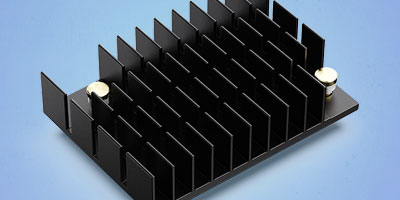
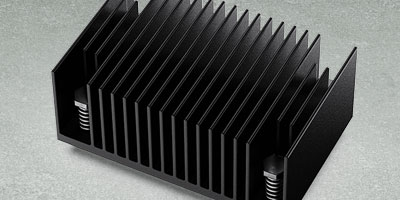
Transceiver heat sinks are usually a solid conductive material, such as aluminum or copper, with fins and a pedestal section which contacts the heat source. Because the heat source surface area is relatively small, these heat sinks can have high temperature gradients across them.
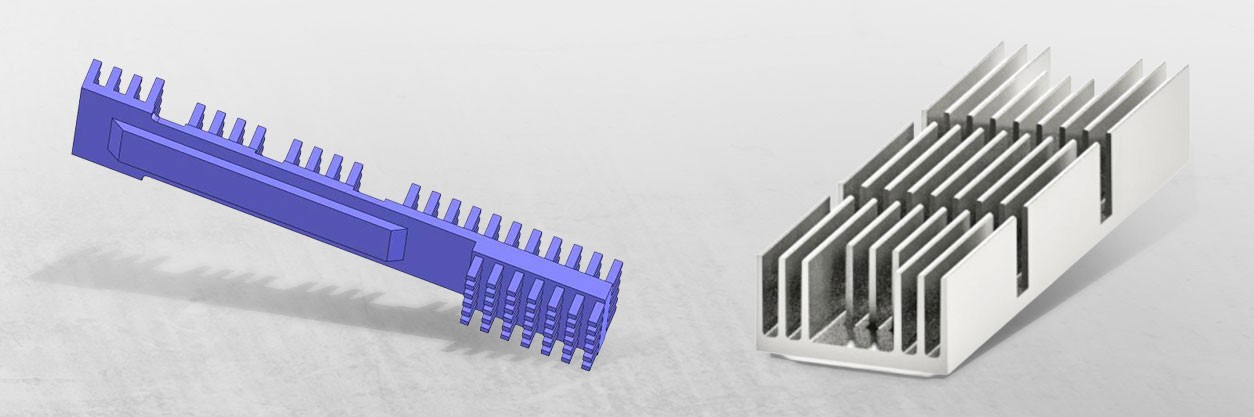
Traditional Heatsinks
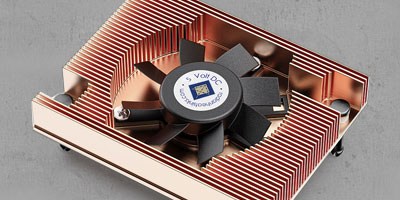
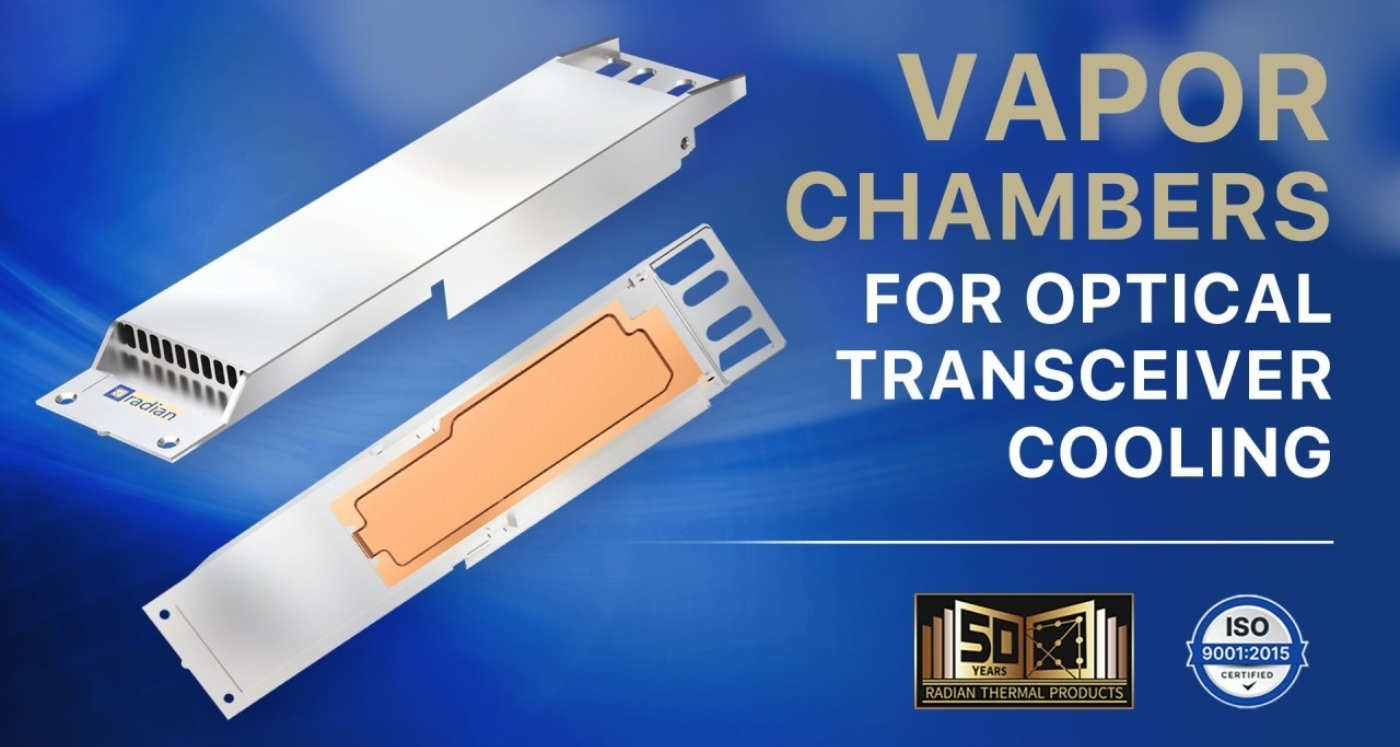
Radian QSFP & OSFP Vapor Chamber Thermal Solutions
Many Manufacturers are recommending liquid cooling as a solution for transceivers with higher power dissipation requirements. At Radian however, we have designed custom VCs that support up to 30W, allowing our customers to continue utilizing their air-cooled infrastructure.
We can design and manufacture the following options:
- Full VC solutions for ride-on heat sinks.
- Pedestal VCs soldered to the ride-on heat sink base.
- Thin VCs embedded in the transceiver housing, itself, making direct contact with heat source/s
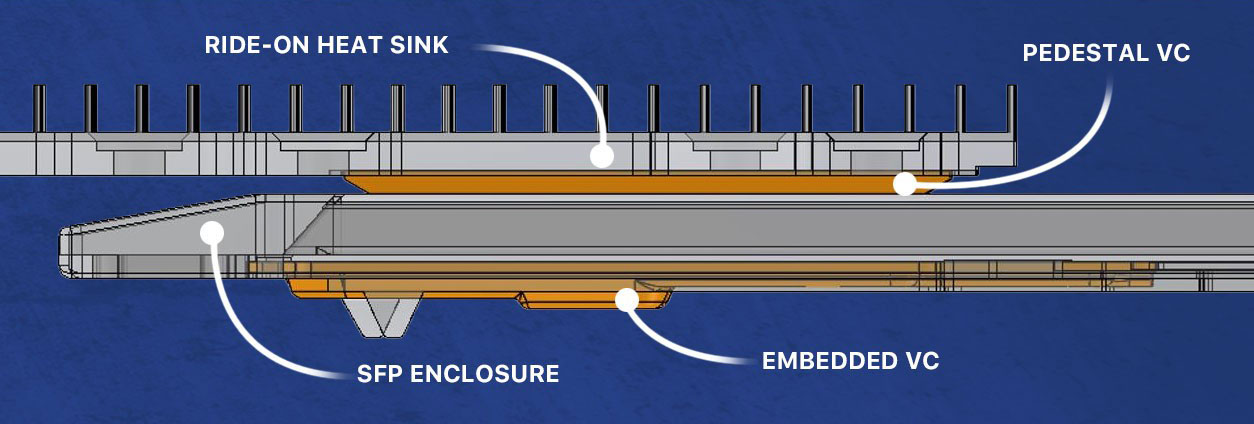
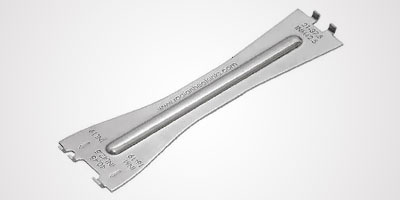
Radian’s vapor chamber for ride-on heat sinks & OSFP embedded VC
Embedded SFP Vapor Chamber (Inside Top Housing)
Results from our verification tests showed that vapor chambers integrated at the board level of the transceiver can provide up to 25% improvement in resistance compared to traditional methods (Testing is based on 30W @6 CFM fed to heatsink)
Ride-on Vapor Chamber Heatsink (Sits on Top Housing)
Results from our verification tests showed improvement to resistance by 20%-35% compared to conventional solid metal heatsinks.