What is Thermal Management?
Thermal Management is the strategic application of thermodynamics to regulate, dissipate, and transfer excess heat away from sensitive electronic components. For 50+ years, Radian Thermal Products Inc. has designed and engineered custom thermal solutions to optimize device performance, ensure operational reliability, and safeguard system hardware across demanding commercial and industrial sectors.
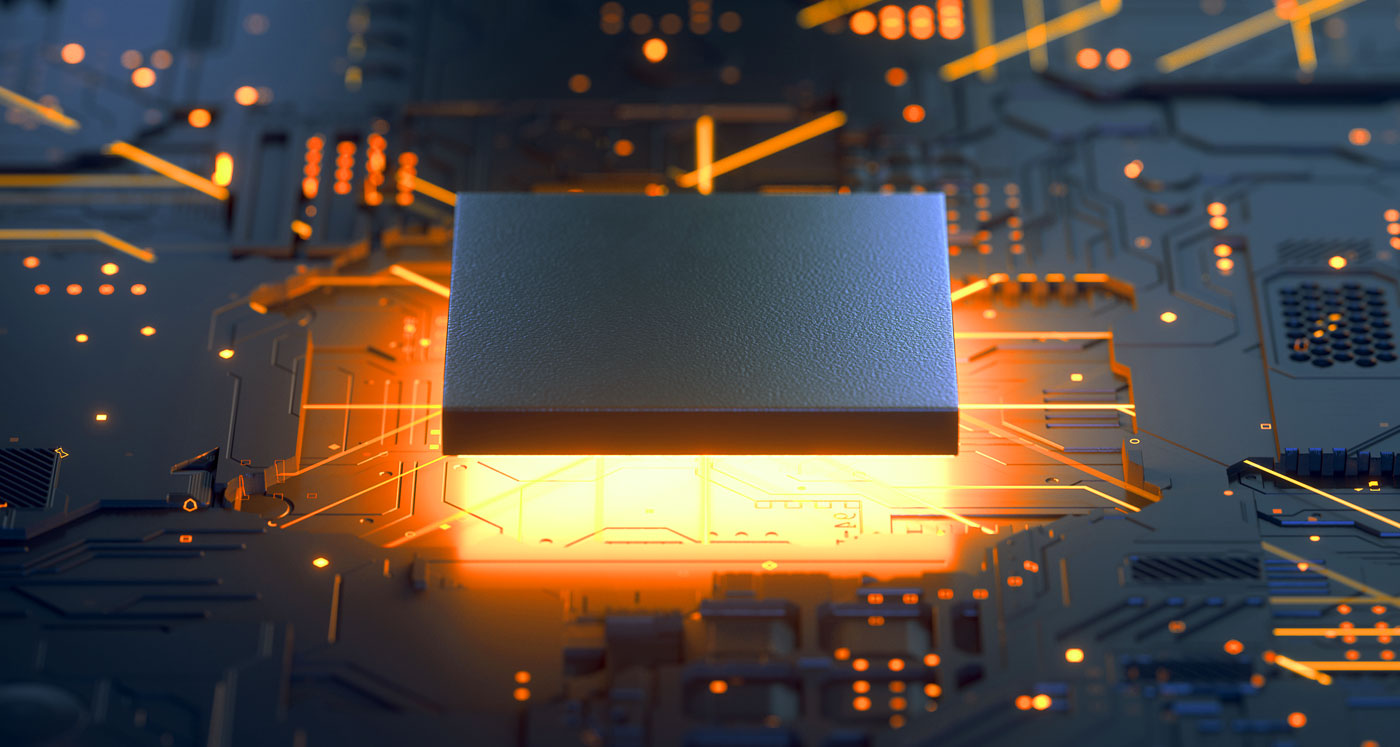
At its core, thermal management is an engineering discipline focused on maintaining component temperatures within safe operating limits. When high-power components operate, they draw electrical current and inevitably generate waste heat. If this heat accumulates, the localized temperature rises, which directly degrades electronic efficiency and structural integrity. Implementing an effective cooling system prevents these bottlenecks, ensuring that power-dense architectures function reliably under peak workloads without performance degradation.
Core Principles of Heat Transfer
- Conduction: The transfer of kinetic energy between atoms through direct physical contact. Heat moves from a high-temperature zone (like a silicon die) to a lower-temperature zone (such as a metal baseplate).
- Convection: The transfer of heat from a solid surface to a fluid medium, such as air or liquid, resulting in movement of the fluid medium.
- Radiation: The emission of energy via electromagnetic waves, moving heat away from a body without requiring a physical medium.
Thermal Management Using Active Cooling
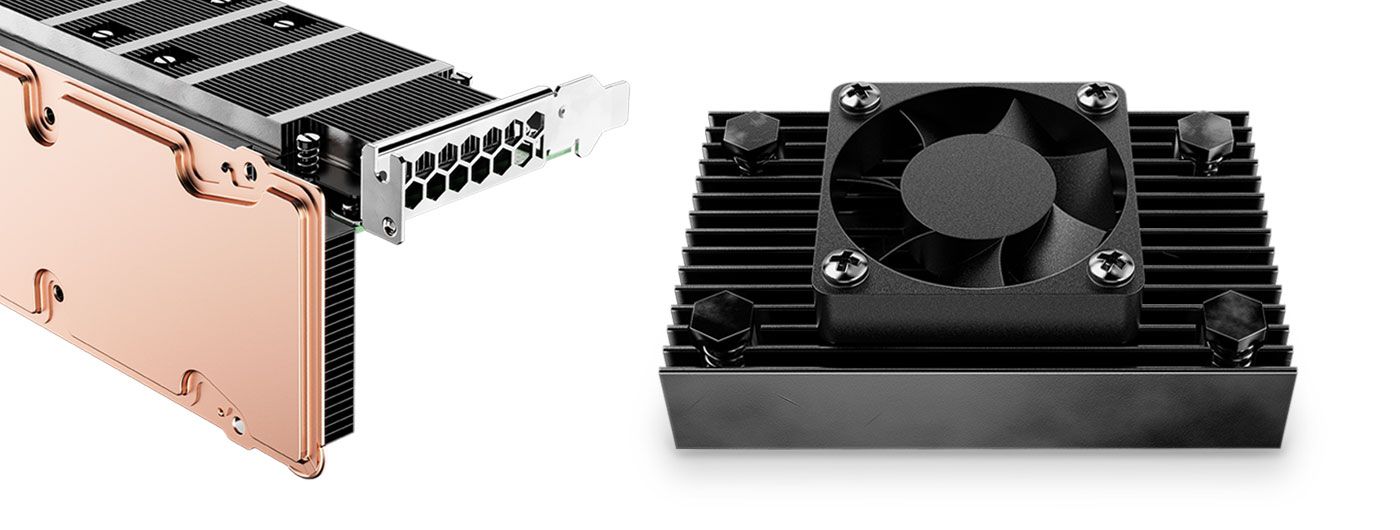
For denser heat loads, closed liquid cooling loops circulate water or specialized fluids across dedicated blocks positioned directly above key hardware components. Active solutions offer precise control over changing operational workloads but require careful power allocation and system integration.
Examples of Thermal Management in Specialized Industries
- Heat pipes & vapor chambers: Radian expanded its portfolio into advanced two-phase cooling by introducing Integrated Heat Pipe capabilities in 2005, followed by proprietary Vapor Chamber Heatsink technology in 2010. A vapor chamber uses a vacuum-sealed internal wick structure to spread localized point heat uniformly across an isothermal base. This rapid heat spreading significantly reduces thermal gradients, allowing systems to utilize full heatsink efficiency within restricted enclosure spaces.
- Liquid Cold Plates at scale: Marking a 50-year milestone of innovation, Radian continues to align its engineering capabilities with evolving industry challenges. Modern high-density hardware requires robust Liquid Cold Plates designed with internal macro or micro-channels. These custom-machined plates provide scalable thermal relief for next-generation systems, supporting critical deployments in high-power infrastructure and complex optical communication networks.
Thermal Management in Electronics and Supply Chain Excellence
- HPC and Data Centers: High-Performance Computing (HPC) nodes handle massive computational datasets that trigger rapid spikes in localized power draw. This is particularly critical as data transmission rates are migrating rapidly from 800G and 1.6T modules toward future 3.2T optical applications. These ultra-high-speed transceivers concentrate immense heat within highly localized, restricted form factors, making advanced liquid and two-phase thermal management an absolute baseline requirement for infrastructure scaling. Radian’s targeted cooling with OSFP modules using thin vapor chambers directly helps facilities manage total power consumption, optimizing efficiency and reducing operating costs.
- Defense & Military Grade Thermal Management: Thermal systems built for defense applications must withstand extreme shock, vibration, and erratic environmental shifts. Radian engineers ruggedized hardware capable of maintaining structural and thermal integrity in high-stress operational environments. By focusing on durable materials and specialized geometric designs, these systems maintain absolute component reliability during critical missions.
- Electronics and Telecommunications: The rollout of high-density hardware and dense network routing infrastructure has severely compressed available board space while driving up heat density. Radian addresses these modern telecommunication constraints by designing low-profile, high-surface-area cooling systems. These configurations keep sensitive transceivers and processing chips running within safe parameters, preventing signal degradation or network dropouts.
- Medical Imaging Systems: Precision is a vital requirement for complex medical hardware, such as MRI and CT scanning equipment. Localized temperature shifts in these imaging sensors can introduce artifacts or skew diagnostic data. Radian delivers high-repeatability machined assemblies that provide steady, stable thermal regulation, ensuring consistent performance for patient-care environments.
Future Trends in Thermal Management Systems
- Global Energy Efficiency Standards: International environmental regulations and strict efficiency mandates require electronic systems to reduce overall power overhead. Radian is always innovating and investing in new thermal management technologies to improve its offerings and capabilities. Because traditional, unoptimized cooling loops consume considerable power, modern thermal architecture must be designed to maximize heat rejection per watt spent.
- Liquid Cooling Solutions in the new era of AI: The rapid expansion of artificial intelligence infrastructure has pushed power densities beyond the cooling capabilities of standard ambient air. Hyperscale data centers require structured liquid cooling loops to sustain continuous workloads without throttling. Implementing optimized liquid cold plates allows operators to capture and remove heat directly at the board level, enabling denser, more powerful computing clusters.
Conclusion: 50+ years of thermal management excellence
Radian thus offers strict domestic supply-chain resilience alongside a global supply chain designed to keep critical industries running cool.